Jealousy in Open Relationships: A Therapist’s Practical Guide
Table of Contents
Yep. There is, in fact, jealousy in open relationships. There’s jealousy in many different types of relationships — familial, professional, platonic. Jealousy is not an emotional experience exclusive to romantic/sexual connections. I’m now about twelve years (🤯) into running a polyamory-affirming practice, and many years into my own non-monogamous life, I can tell you the question I get constantly — “Am I too jealous of a person to be non-monogamous?” “Does this jealousy mean I’m not cut out for this?”
The answer is almost always no. Jealousy is one of the most universal human emotions, and it shows up whether you’re monogamous, polyamorous, or somewhere in between.
But what are you doing with your jealousy when it comes up? Do you push it down and hope it disappears? Do you let it run the rest of the conversation? Do you ask what story it’s been telling you about yourself or your partner(s)? Do you separate yourself from the feeling enough to look at it, or do you become it?
I run a DBT Skills Group for non-monogamous folks and work with polyamorous folks almost every day. What I can tell you, from the research, my clinical work, and my own life, is that jealousy in any relationship is workable. Often uncomfortable, often inconvenient, and absolutely workable. The folks I see who handle it best are the ones who stop trying to make it go away and start learning what it has to tell them. You can be one of those people. 🙂
This blog is for those already in some form of non-monogamous / polyamorous / open relationship and getting hit by jealousy harder than they expected, and for the folks considering opening up who want to better understand what they’re walking into. There’s a free Jealousy Framework workbook linked at the bottom that walks you through the practices step by step.
Key Takeaways
- Jealousy is a universal human emotion that shows up in family dynamics, friendships, workplaces, and romantic and sexual relationships, regardless of structure. Feeling it is part of being a person with attachments. In non-monogamous, polyamorous, and open relationships, it pops up too, often around different triggers than in monogamous ones.
- Jealousy is one of the harder emotions to tolerate. It pulls hard on your nervous system and on your action urges, which is part of why the urge to react fast (or shut it down fast) feels so loud.
- Jealousy comes with a story that tends to be very loud and very persuasive. The story often says something about your worth, your safety, or your partner’s intentions. Separating yourself from the story long enough to look at it is part of how you stop being run by it.
- Two of the biggest mistakes people make with jealousy, as identified in Dr. Joli Hamilton’s research, are trying to get rid of it before learning from it and trying to manage it by controlling a partner’s behavior.
- Jealousy and compersion (joy at your partner’s joy) can live in the same person, about the same partner, in the same hour. They don’t function as opposites on a spectrum.
- I’m Rachel Wright, a polyamorous and queer licensed therapist who also runs a DBT Skills Group for non-monogamous folks. My free Jealousy Framework workbook, linked below, walks you through where to start.
What jealousy actually is
Jealousy is information. That’s the frame I use with clients, because it shifts the whole conversation away from “what’s wrong with me” toward “what is this telling me.”
In the simplest terms, jealousy is your nervous system flagging something. It might be pointing out that an agreement you and your partner made isn’t being honored, or that your attachment system is activated and needs tending to. It might even be telling you that the structure of your relationship has shifted in a way you weren’t ready for. It might also be indicating that something about your story, your history, or your sense of worth is being challenged and needs care. Put simply: Jealousy is your nervous system flagging a perceived threat.
It can also be a few of those signals at once, which is part of why jealousy can feel so disorienting in the moment. You can be reacting to a current situation, an old wound, and be fatigued all at the same time.
Dr. Joli Hamilton, a research psychologist whose doctoral work focused on the lived experience of jealousy, puts it directly:
“Jealousy is not the enemy. Choosing our responses to it thoughtfully makes it possible for jealousy to enhance our intimacy with self and others, rather than harm our relationships.”
What jealousy in open relationships doesn’t mean: that you’re ‘failing’ at non-monogamy, or that something is wrong between you and your partner(s). Most of the NM folks I work with feel jealousy regularly, sometimes intensely, and they’ve still built durable, fulfilling, and satisfying relationships. The two things coexist. And, baby… and.
A piece that often surprises people is that jealousy and compersion (the feeling of joy at your partner’s joy with someone else) aren’t opposites on a spectrum. Recent research by Dr. Justin Mogilski and colleagues showed that jealousy and compersion can show up in the same person, about the same partner, about the same situation, often in the same hour. You can be thrilled that your partner is on a great date and still feel a slight grip in your chest as you wait for them to come home. Both can be true at the same time.
What jealousy in open relationships actually looks like, broken down
Let’s dig into the important elements of jealousy that you gotta know.
The vocabulary. Jealousy in open relationships doesn’t only feel like one thing. It can show up as feeling defensive, mistrustful, rivalrous, suspicious, angry, scared, anxious, possessive, wary, watchful, or self-protective. It can also be a fear of losing someone or something. Step one is to name what’s coming up for you.
The prompting events. The events that trigger jealousy include any moment when an important relationship feels threatened, when a potential competitor is paying attention to someone you love, or when someone goes out with a person you wanted to be with. In non-monogamy, the prompting events get specific: your partner telling you they want more time alone with another partner, watching them flirt with a metamour, seeing them light up about a new connection in a way that feels different from how they light up about you. Step two is naming the specific prompting event, which is very helpful, because vague jealousy is harder to work with than specific jealousy.
The interpretations. This is the layer where most jealousy spirals live. The common interpretations go something like this: your partner doesn’t care about you anymore; you don’t measure up to a rival; you’re being cheated on; no one cares about you; you’re nothing to your partner; you don’t deserve what they have. In polyamorous relationships, the interpretations often sound like: my partner is going to leave me for them, I’m being replaced, the new connection means I’m not enough, the time imbalance means I’m being deprioritized. These feel like facts when you’re inside them, but they’re interpretations. Naming them as interpretations is the third step.
The body. Jealousy, especially in the context of something new, is a full nervous system event. Breathlessness, fast heartbeat, tightness or a lump in the throat, muscles tensing, teeth clenching, becoming suspicious, injured pride, feelings of rejection, needing to be in control, feeling helpless, the urge to grasp what you have or push away your ‘rival’. Noticing where it lives in your body is the fourth move.
The action urges. Every emotion urges us to something. Jealousy pulls you toward verbal accusations, demanding accounts of time or activities, interrogating your partner, spying, collecting evidence, clinging, and excessive demonstrations of love. None of these are inherently bad impulses, and most of them, when acted on without slowing down, hurt the relationship more than the jealousy did. Knowing what jealousy is pulling you toward (what your urges are when you feel jealous) is the fifth step, and learning how to choose whether to follow the urge is a massive part of the work.
The aftereffects. If jealousy goes unworked, it leaves a trail: narrowing of attention, seeing the worst in others, becoming mistrustful across the board, being hypervigilant to threats, and becoming isolated or withdrawn. These are reversible! Step six is to notice the aftereffects and tend to them, including the trust you may need to rebuild with yourself. Jealousy in open relationships can really fester when hidden, along with the shame from hiding it.
Why jealousy shows up differently in non-monogamy
When researchers began measuring jealousy in mono- and non-monogamous samples, some older assumptions about jealousy fell apart. Mogilski’s work, alongside earlier studies from Dr. Terri Conley’s lab and more recent comparative research by Dr. Joli Hamilton, Nicholas Morrison, and Ayla Gioia (published in 2024 in Cogent Mental Health), found that the emotion itself shows up in both groups. The difference between the two groups? The triggers.
In monogamous relationships, jealousy is more often triggered by sexual infidelity, or the threat of sexual infidelity. Sex with someone else means an agreement (the agreement of monogamy) was crossed, and the intensity tends to spike around that specific behavior.
In non-monogamous relationships, sex with other partners is often part of the agreement, so it carries less of that specific charge. What tends to trigger jealousy in open relationships is what can feel threatening: emotional intimacy with another partner, shifts in the perceived hierarchy of the relationship, or a sense that your own position is changing. Time imbalances and unstated changes to existing agreements can also bring up jealousy.
What Hamilton’s research shows, and what I see often in session, is that non-monog folks tend to develop a more deliberate toolkit for working with jealousy because the structure requires it. When you can’t avoid the emotion, you build the muscles to move through it. Many mono folks manage jealousy by avoiding situations that trigger it (”you can’t go to that strip club,” or “you can’t hang out 1:1 with a woman”). However, non-monogamous folks, by necessity, learn to face it and move through it. Jealousy in open relationships isn’t something that every non-monogamous person experiences, but the vast majority do at some point.
The most common triggers I see in my practice
New relationship energy on the other side. When your partner is in the early, intoxicating phase with someone new, their attention moves, they text differently, they light up differently, and your nervous system reads this as threat — even when nothing has actually changed about your relationship with them.
Time and scheduling. When the calendar starts to feel icky, jealousy in open relationships often shows up before the conversation about scheduling does. It’s worth checking whether the trigger is the emotional intimacy or the practical math of how time is getting allocated.
Comparison with metamours. Metamour is the word for your partner’s other partner. When you start comparing yourself to a metamour (their job, their body, how funny your partner says they are), jealousy is often dressed up as insecurity.
Changes to existing agreements. If you and your partner had an agreement that changed without a conversation, jealousy often signals that the agreement needs to be renegotiated explicitly. Learn more about creating relationship agreements here.
Reminders of past wounds. Sometimes jealousy stems from a previous relationship in which you were hurt, or from a family-of-origin pattern in which you seemed like an afterthought.
Two big mistakes people make with jealousy
Hamilton names two specific mistakes (that I often see in my practice), and these are fucking game changers, ya’ll.
Mistake one: trying to get rid of jealousy before learning from it. This is the instinct to push away an uncomfortable emotion when it arrives. Jealousy is uncomfortable enough that most people want it gone immediately. The problem is that jealousy is important information, and if you suppress it before you understand what it’s telling you, you lose the data. We gotta observe it, describe it, feel it, and ask what it’s pointing at. After the message is received, the intensity tends to drop on its own. You’ll make the fastest progress managing your jealousy if you’re willing to stay with it long enough to listen.
Mistake two: trying to manage jealousy by controlling a partner’s behavior. This is the bigger trap, and the one that erodes relationships fastest. It’s also where jealousy’s story (the one that says you’ll be safe if your partner just does X) gets handed the pen to write the next agreement, when the story actually belongs to you.
When jealousy spikes, the temptation is to make it stop by changing what your partner is doing — spending less time with their other partner, a different texting agreement, a new agreement that limits them. Sometimes those asks are reasonable, but most of the time, they’re an attempt to regulate your own nervous system through somebody else’s behavior, and that path runs out fast.
It can feel much easier to ask someone outside yourself to change something because it seems like, if they do, it will relieve the pain or discomfort we’re feeling in that moment. The direction of work around jealousy is mostly inward — toward your own patterns, your own history, & your own capacity. That’s the part that’s both harder and far more empowering than the controlling route, and it’s the part that makes the jealousy actually workable.
What helps in the moment
When jealousy spikes in us, your body is usually a step ahead of your brain. It can be quite alarming, actually. I recommend three things, in this order.
First, name it out loud. If you’re familiar with DBT, this is a great chance to use STOP and maybe TIPP. Even just to yourself! “I’m feeling jealous.” The act of naming the emotion engages a different part of the brain than the part that’s spiraling, and it tends to bring the intensity down a notch. If you can, say it to your partner(s) too, without making it their job to fix.
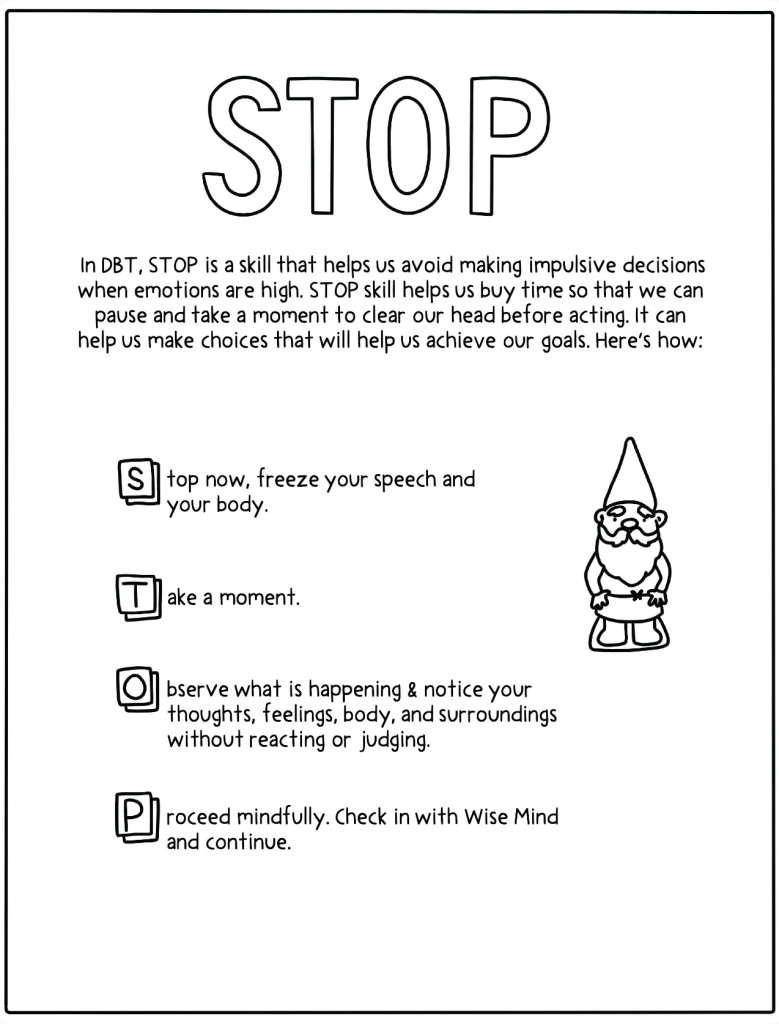
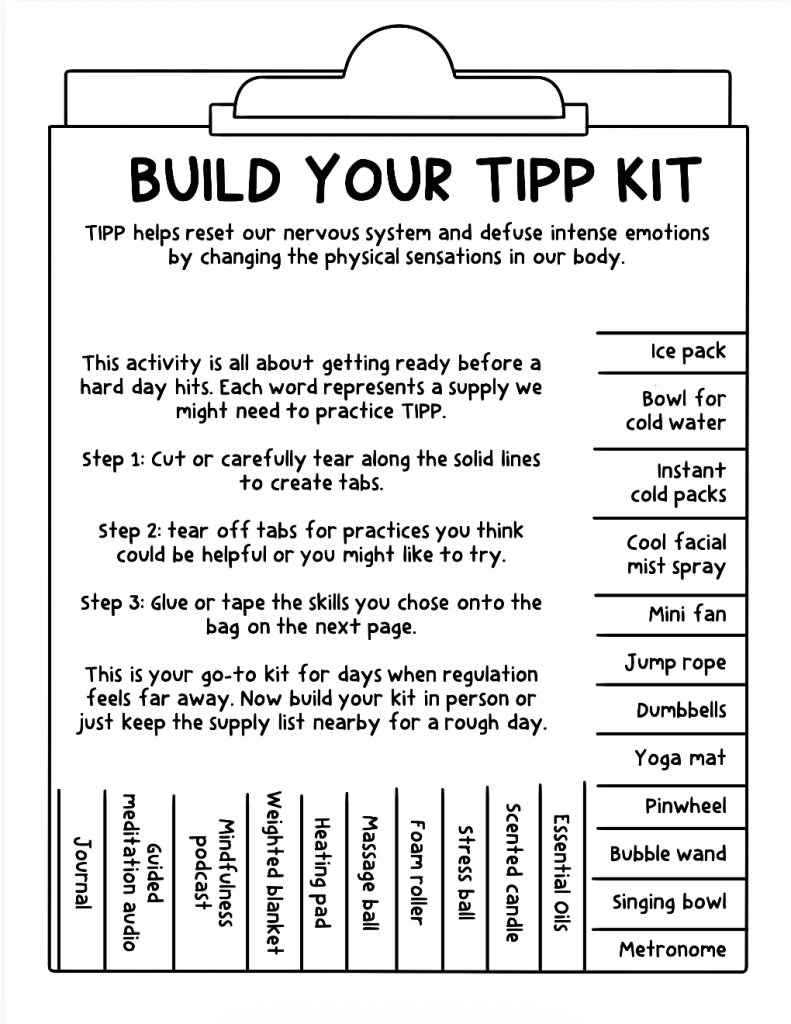
Second, slow your body down before you make any decisions. Distress tolerance is what we’re practicing here. In this case, staying with a hard emotion long enough that it can do its work. Jealousy peaks fast and ebbs faster than people expect. A walk, a glass of water, ten slow breaths, a hot shower, a quick ice bath — it’ll help. The decisions you make in the middle of a jealousy spike are rarely the decisions you’ll want to have made in an hour. Buy yourself time. Future you shall thank you. 🙂
Here are some DBT tools put together by a therapist who is also an incredible artist. I hope this helps with the concept of slowing your body and nervous system down without making any decisions.
Third, ask what specifically is at risk. This is where Wise Mind comes in, the part of you that lets your logic/reasoning mind and your emotion mind start talking to each other. Is your relationship in danger, or is your nervous system activated? Is an agreement being broken, or is your attachment system telling you it needs reassurance? The answers usually point you toward the right next move, and they keep you from treating an internal experience as an external crisis.
What helps over the longer arc
Secure attachment with your own partner. Jealousy, especially jealousy in open relationships, is much easier to navigate when the underlying open relationship feels stable. If it doesn’t, that’s where to put your energy. The jealousy will keep flaring until the underlying issue is addressed/tended to.
Candid communication about the structure. A lot of jealousy I see in long-term NM relationships traces back to an agreement that wasn’t explicit, or that changed without a conversation. Routine check-ins on how everything is working keep these from accumulating. Once a month is a useful baseline — ideally weekly — especially if you’re in a season of change.
A felt sense that there’s enough. Enough time, enough love, enough attention. Enough is something you build deliberately, through small regular acts of choosing each other out loud. When we feel enough, when we’re receiving enough, it’s not as easy to fall into a trap of jealousy in open relationships.
A relationship with your own jealousy. The folks I see who navigate non-monogamy well tend to be on a first-name basis with their jealousy. They know its patterns, what tends to set it off, what soothes them. Some of them have literally given jealousy a name, a character, a voice, so they can notice when it’s the one talking and decide whether to follow it.
When jealousy is information vs. when something needs to change
Sometimes jealousy is an emotion to ride out, and sometimes it’s data that something needs to change, so how can you tell the difference?
Jealousy in open relationships is worth taking more seriously if it’s persistent, worsening over time, or recurring with a specific pattern. In those cases, jealousy might be telling you that the version of non-monogamy you’re in isn’t actually fitting you. Maybe the hierarchy needs to be renegotiated, or the pace needs to slow a bit. Or, a specific dynamic with a metamour needs to be addressed directly. And even maybe non-monogamy isn’t the right structure for you — which is so so soooo important to be honest about.
Jealousy is a universal emotion. What you do with it is what matters, and you have more agency in that than the spiral wants you to believe.
When working with a therapist might help
If jealousy is interfering with your relationship, your sleep, your work, or your sense of self, and the tools above feel hard to apply on your own, that’s a point to get more support. An NM-affirming therapist or skilled coach can help you map your own patterns, work with your nervous system in real time, and have the harder conversations with your partner with someone holding the room. If you’d like to work with someone on my Shame Free Therapy team, you can find more information here. I also have so many wonderful colleagues scattered throughout, so please don’t hesitate to reach out and let me help you find a good fit!
FAQs
Is it normal to feel jealous in an open relationship?
Yes!!! I prefer the word “typical” rather than “normal,” but yes. The research repeatedly shows that non-monogamous folks feel jealousy at about the same rates as monogamous folks. The triggers tend to be different, and the emotion itself is universal.
Does jealousy go away in any non-monogamous relationship?
Does anxiety go away in any person’s entire life? Does feeling sad go away because we’ve dealt with it? No. Jealousy does tend to ebb and change shape with practice, communication, and time. Most NM folks I work with describe jealousy becoming less frequent and less intense over the years, though most also say it doesn’t disappear entirely (that’s my experience, too). The goal is to be on a first-name basis with it, more than to eliminate it.
Can you be non-monogamous / polyamorous or in an open relationship if you’re a “jealous person”?
Jealousy is an emotion, not a personality trait. Emotions don’t last forever. So, yes. Some of the most thoughtful people I know are people who feel jealousy strongly and have learned to work with it. Feeling jealousy is part of being human, including for people who do non-monogamy beautifully, are monogamous, are romantic or asexual — it’s universal.
What’s the difference between jealousy and envy?
Jealousy is about losing something you have, or fearing that you might lose it. Jealousy has a threat attached to the precipitating event, while envy is about wanting something someone else has. In non-monogamy, and in life, both can come up. Sorting which one you’re feeling can help point you toward the right conversation.
How do I know if my jealousy is a signal that the relationship isn’t working?
Jealousy that’s persistent, escalating, or tied to a specific dynamic that keeps repeating is worth looking into a bit. It may be signaling an agreement that needs renegotiating, a structural imbalance, or a structure that’s no longer the right fit. Working with a polyam-affirming therapist can help you sort what’s information about you, what’s information about the relationship, and what’s information about the structure itself.
Can my partner make my jealousy go away?
No. But how fucking cool would that be, if we could just literally wave a magic wand ~~**bippidi boppidi boo**~~ and all of a sudden, it starts lessening. It doesn’t need to go away, but we can create a relationship with it that serves you rather than hinders your life. Trying to make it their job tends to make the relationship smaller without reducing the jealousy. Your partner can support you, validate you, hold space, and honor agreements. The actual work of metabolizing jealousy belongs to the person feeling it. That’s actually one of the most empowering parts of doing non-monogamy well, honestly.
What’s the fastest way to start working with my jealousy?
Name it, slow your body down, ask what’s at risk, then look at the patterns over time. My free Jealousy Framework workbook, which I co-created with Dr. Joli Hamilton, walks you through this step by step, and you can grab it here.
TL;DR
Jealousy is a universal emotion that arises in non-monogamous relationships in response to specific structural triggers, and it’s totally manageable with the right skills. Having jealousy in open relationships carries no verdict on you or your relationship. The research keeps showing that non-monogamous folks feel jealousy just as often as monogamous folks do; it’s just that the triggers tend to be different (emotional intimacy, time imbalances, perceived hierarchy shifts, NRE on the other side).
Two of the biggest mistakes are trying to suppress jealousy before learning from it and trying to manage it by controlling a partner’s behavior, both named in Dr. Joli Hamilton‘s research. The work goes inward, toward your own patterns, capacity, self-awareness, and a toolkit for distress tolerance, emotion regulation, mindfulness, and interpersonal effectiveness. Name it, slow your body down, ask what’s at risk, build secure attachment with your own partner, talk about the structure regularly, and get to know your own jealousy patterns. My free Jealousy Framework workbook, made with Dr. Joli, walks you through it one step at a time.
- Polyamory vs Open Relationship vs Swinging: A Therapist’s Guide to the Difference
 Sometimes I loooove words, and other times they drive me absolutely insane. The number of times I’ve been asked, “What’s the actual difference between polyamory, open relationships, and swinging?” Or…
 - Jealousy in Open Relationships: A Therapist’s Practical Guide
 Yep. There is, in fact, jealousy in open relationships. There’s jealousy in many different types of relationships — familial, professional, platonic. Jealousy is not an emotional experience exclusive to romantic/sexual…
 - Anal Play for Beginners: A Sex Therapist’s Guide to Starting Slow
 Most of the questions I get about anal play for beginners start with some version of “is this normal, and where do I even begin?” The first part is easy….
 - What Is Good Sex? (It’s Probably Not What You Think)
 Table of Contents What is good sex? If you asked ten people, you’d probably get ten different answers, and most of them would miss the mark. Almost everything we’ve been…
 - How to Know If Your Therapist Is a Good Fit (From a Therapist)
 Table of Contents “Is my therapist a good fit?” is one of the most common questions I get, and it’s also one of the hardest to answer in a Google…
 - Coming Out as Polyamorous: How to Tell Friends and Family You’re Non-Monogamous
 Table of Contents “How do I tell my parents I’m polyamorous?” is one of the questions I hear most often from non-monogamous clients, and it’s usually followed by, “Do I…
 - What Is Emotional Labor in Relationships?
 Table of Contents “Emotional labor” is one of those terms that gets used constantly but rarely gets explained well. It shows up in arguments, think pieces, and memes, but if…
 - How to Make a Mono/Poly Relationship Work (Without Losing Yourself or Each Other)
 Table of Contents You love your partner. Your partner loves you. But one of you wants non-monogamy and the other doesn’t. And now you’re both wondering: Can this actually work?…
 - What Your Conflict Style in Relationships Is Actually Protecting You From
 The way you handle conflict didn’t come from nowhere. Your conflict style in relationships has an origin. Whether you shut down, explode, people-please, intellectualize, or crack jokes when things get…
 - Valentine’s Day Intimacy Ideas: A Therapist’s Guide for Every Kind of Relationship
 Why Valentine’s Day Can Feel So Loaded Valentine’s Day intimacy ideas are everywhere this time of year, yet many people feel more pressure than connection when the holiday approaches. That…
 - The Cowgirl Rodeo Rider Premium Review: Thrusting Meets Tapping
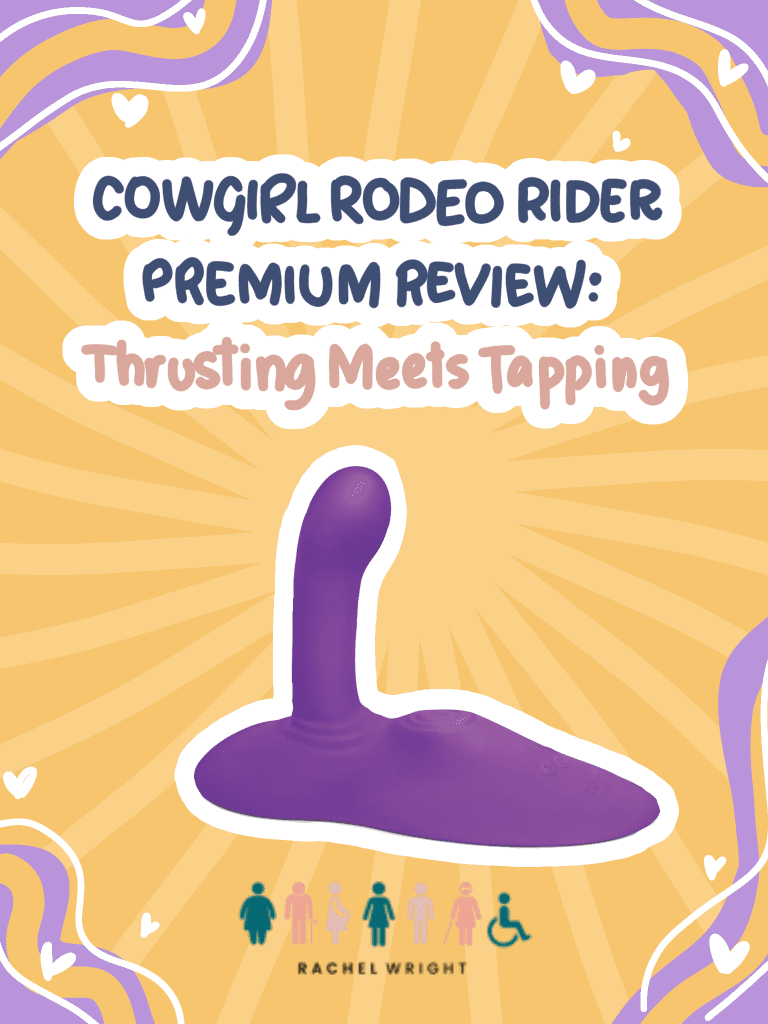 The Cowgirl Rodeo Rider Premium Sex Machine is marketed as a ride-on toy that combines thrusting and clitoral tapping. But, just that.. It’s that in a compact and premium package….
 - Creating Relationship Agreements 101: How to Get Clear, Connected, and Collaborative
 Most relationships run on autopilot. We assume we’re on the same page – about sex, texting exes, how often we talk during the day, what counts as cheating – until…
 - Hands-Free Grinding with The Cowgirl Rodeo Rumbler: My Honest Review
 If you’ve ever been curious about a hands-free grinding toy and want to try something new, check out this blog. In The Cowgirl Rodeo Rumbler Review, we’ll dive into everything…
 - What Repair After a Fight Actually Looks Like (Yes, With Scripts)
 Most of us were never taught how to repair after a fight. We were taught how to win, how to be right, how to move on quickly, or shove it…
 - The Cowgirl Premium Saddle Sex Machine Review
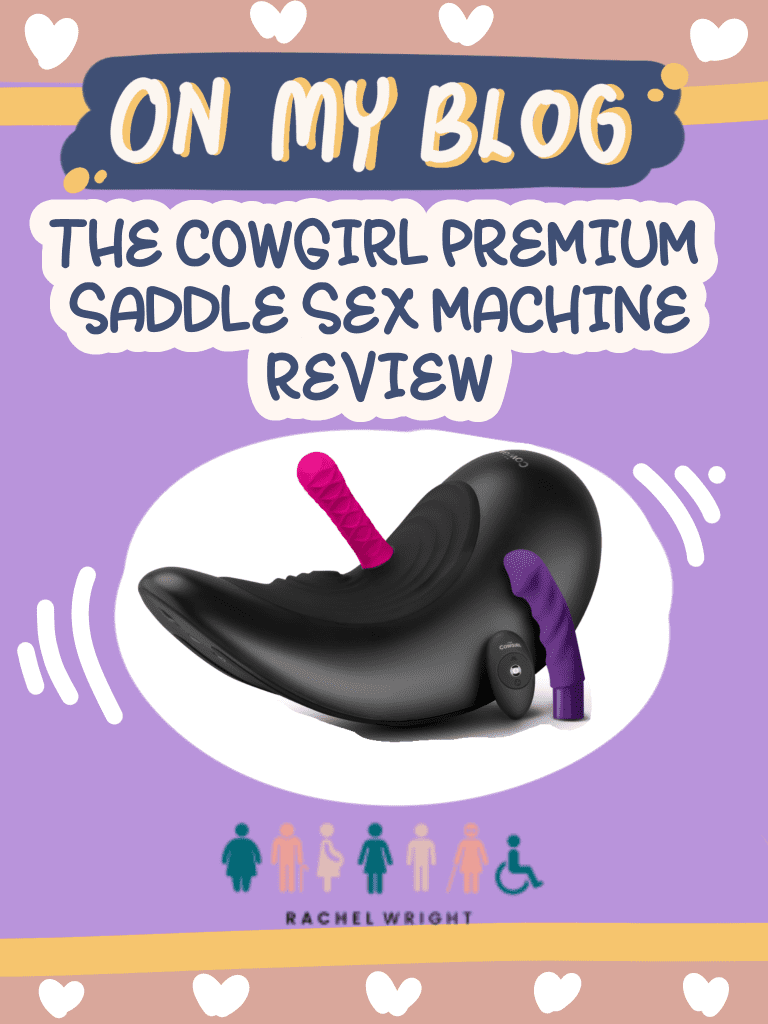 If you’ve been shopping in the luxury sex toy space, you’ve likely heard of the Cowgirl Premium Sex Machine. In this post, The Cowgirl Premium Saddle Sex Machine Review, I’m…
 - Is It a Relationship Deal Breaker or Something We Can Work On?
 One of the hardest things to sit with in any long-term relationship is the question: Is this a relationship deal breaker or something we can work through? When the stakes…
 - What Is the Pleasure Ladder? A Trauma-Informed Framework for Reconnecting with Touch
 If touch or pleasure have ever felt complicated, inconsistent, or even unavailable, especially after stress, trauma, parenting, illness, or disconnection, you’re not alone. Introducing the pleasure ladder. Many people think…
 - What Monogamous Couples Can Learn From Non-Monogamy
 What can monogamous couples learn from non-monogamy? Well, monogamy is often treated as the default. It is rarely questioned, rarely discussed, and rarely examined with the same intention people bring…
 - What We Really Mean When We Talk About Emotional Regulation
 “Regulate your emotions,” or “Regulate your nervous system.” If you’ve spent even 10 minutes online in the past year, you’ve probably seen this phrase on parenting accounts, in dating advice,…
 - How to Talk Dirty When You Feel Awkward
 A beginner’s guide to finding your voice in the bedroom. Let’s walk through how to approach dirty talk when you feel awkward, step by step. There’s a moment many of…
 - Burnout or Depression? How to Tell the Difference (and Why It Matters)
 You’re exhausted. Everything feels like too much. Your brain won’t focus. You’re snapping at the people you love. You might wonder: Is this burnout or depression? They share a lot…
 - How to Break Up With Your Therapist (Kindly + Clearly)
 Therapy can be one of the most meaningful investments you make in yourself. But what happens when it’s time to move on? If you’re wondering how to break up with…
 - LELO MIA™ 3 Review
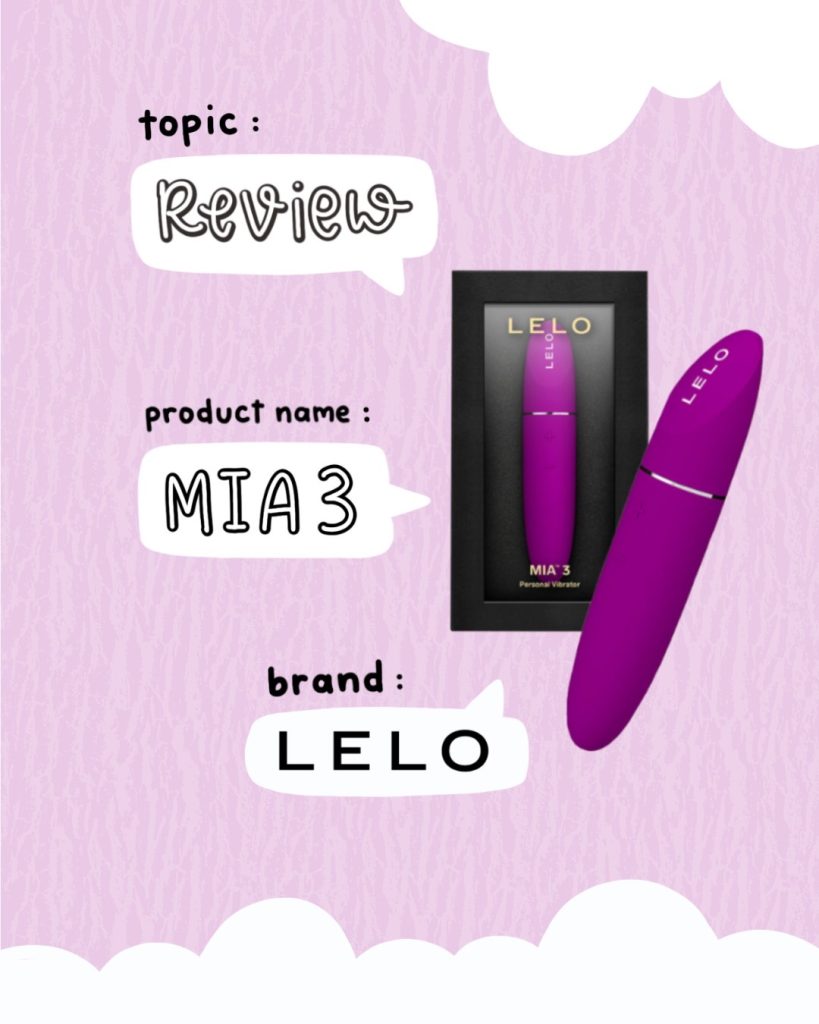 The following is a sex toy review all about the LELO MIA™ 3 from Rachel Wright. The LELO MIA™ 3 is a new take on the classic “lipstick vibrator,” creating…
 - The Cowgirl Cone: A Rideable Revolution in Pleasure – A Review
 There are a lot of sex toys out there. Vibrators. Dildos. Wands. Air pulsers. But occasionally, something new comes along that makes you sit up (or, in this case, sit…
 - LELO ENIGMA™ Double Sonic Review
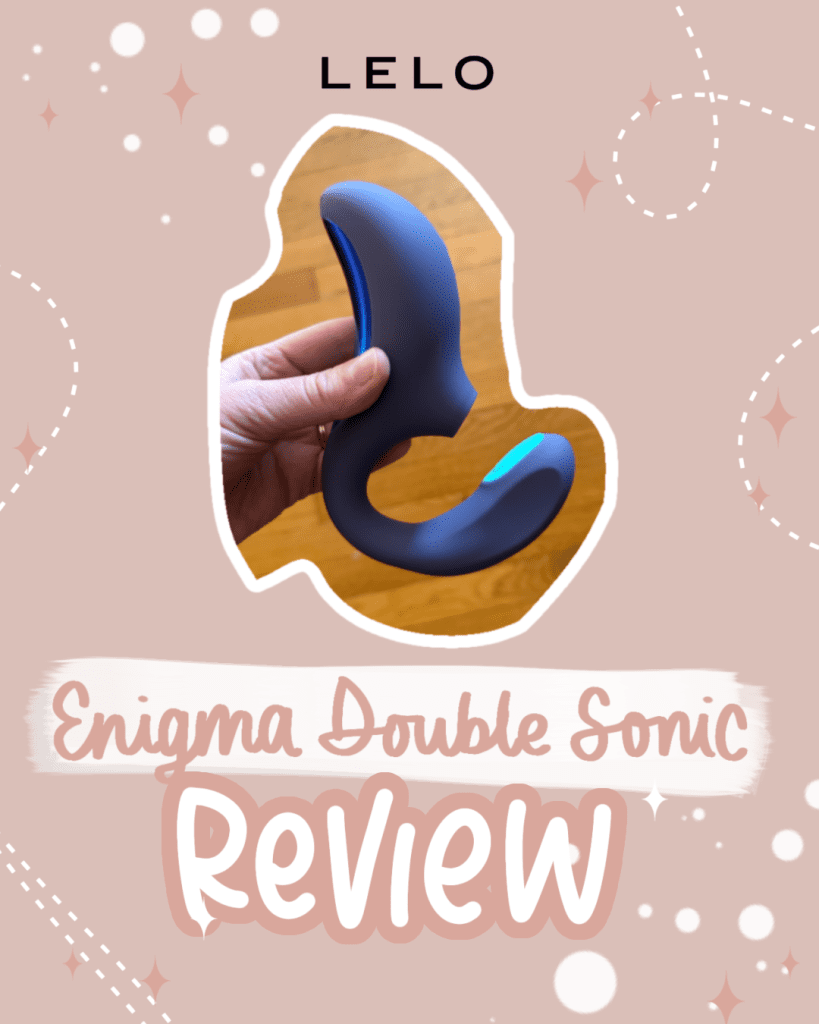 The following is a sex toy review all about the LELO ENIGMA™ Double Sonic from Rachel Wright. The LELO ENIGMA™ Double Sonic is a triple stimulation massager, which they describe…
 - Attachment Styles Aren’t Life Sentences — Here’s the Truth
 If you’ve spent any time in the self-development or pop psychology world lately, you’ve probably heard about attachment styles. They’re everywhere: TikTok, relationship advice columns, podcasts, even memes. However, while…
 - LELO HUGO 2 Sex Toy Review
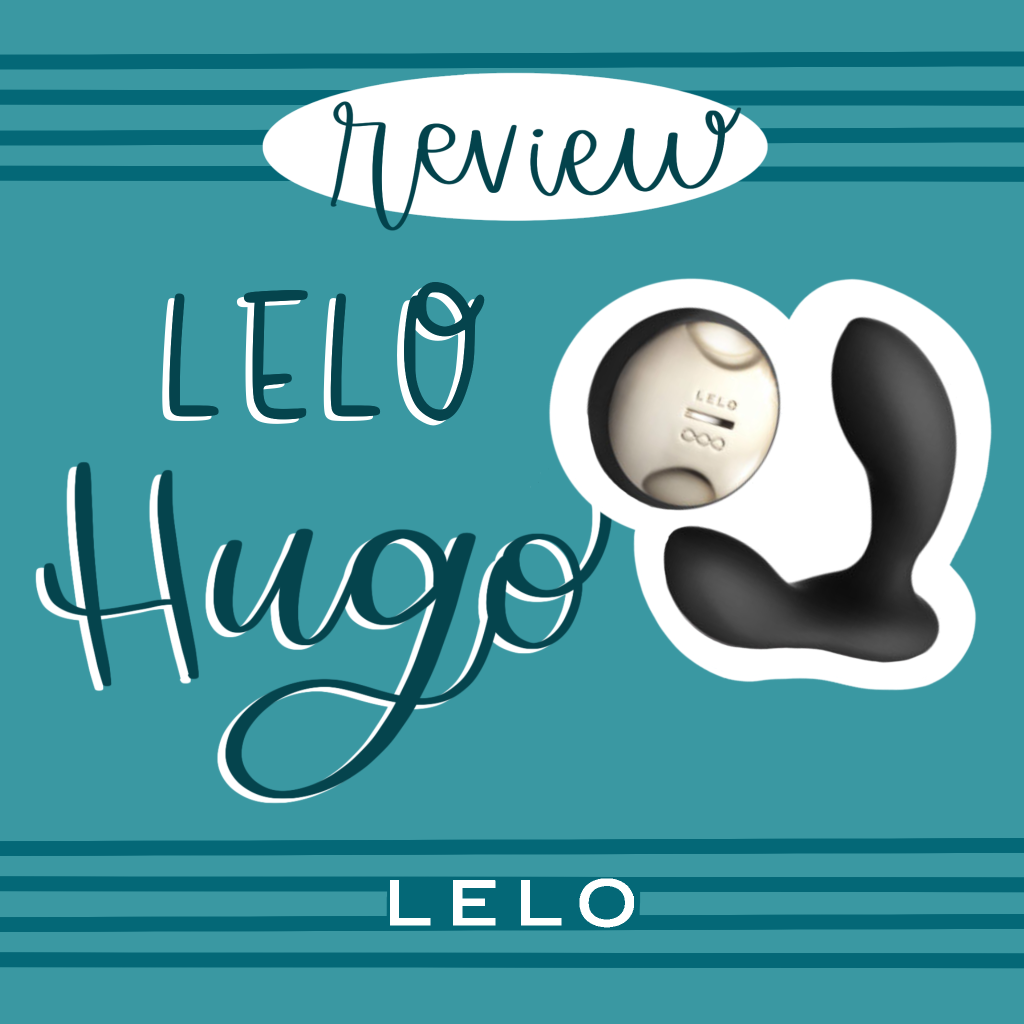 The following is a sex toy review all about the LELO Hugo 2 (with remote). The LELO Hugo is a remote or app-controlled prostate massager from the luxury sex-tech brand…
 - Hankey’s Toys Sex Toy Review
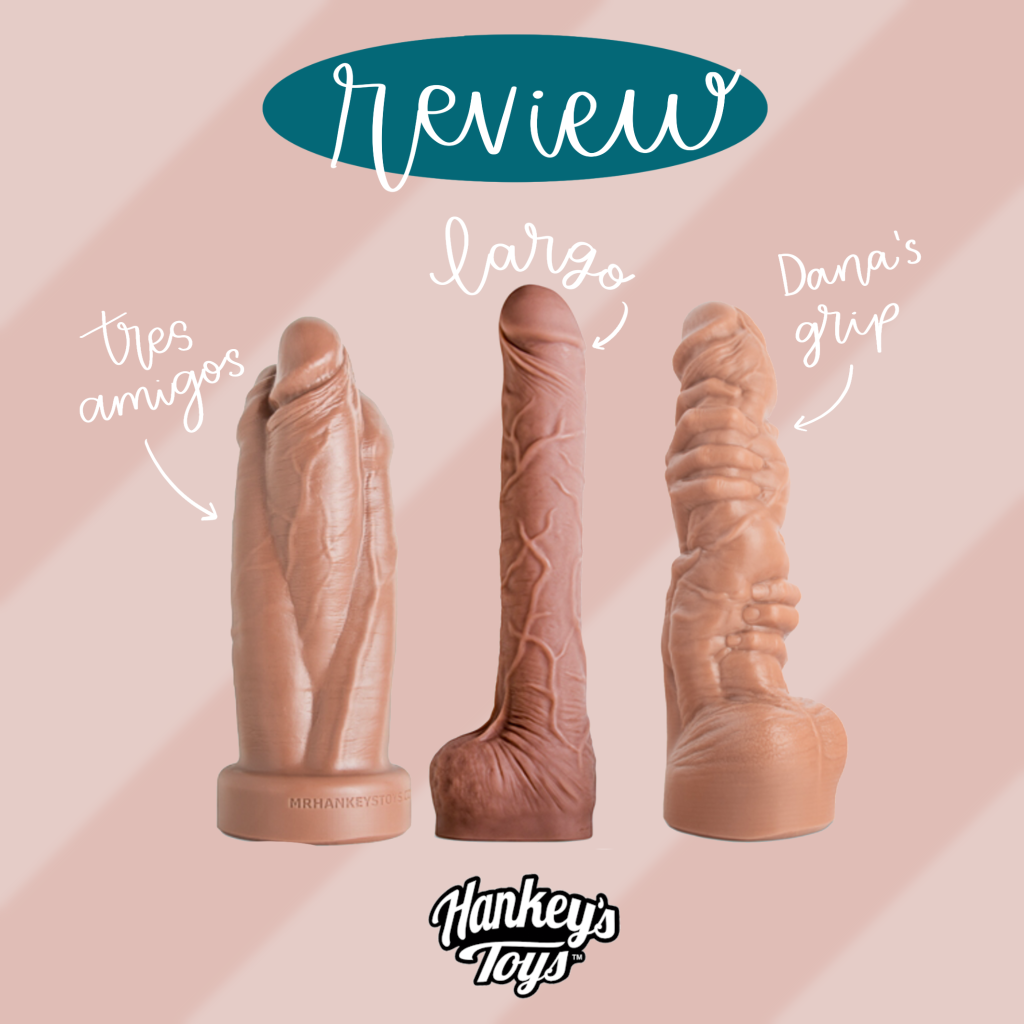 The following is a sex toy review of 4 of the wild products from Hankey’s Toys. Their website says: “Hankey’s Toys are handmade from only the finest materials, using molds…
 - Womanizer Next Sex Toy Review
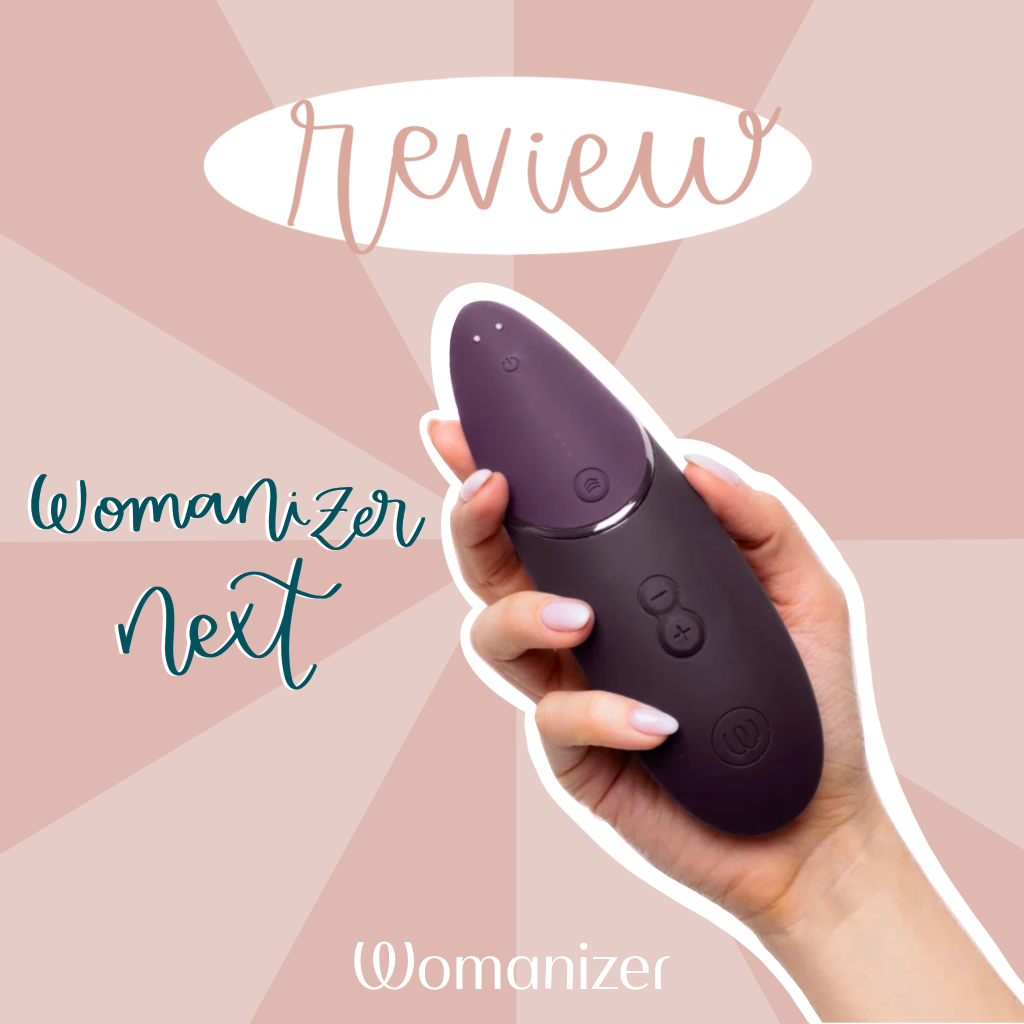 The following is a sex toy review all about the Womanizer Next. The Womanizer Next is Womanizer’s new premium flagship product. It’s luxurious and has cutting-edge features, including 3D Pleasure…
 - The Positive Impact of Sex Toys on Various Aspects of Life
 In the age of self-awareness and self-care, there’s been a growing acceptance and embrace of our sexuality. One of the manifestations of this movement is the increasing popularity of sex…
 - Intimate Wellness: The Interwoven Paths of Sexual and Mental Health
 Today, let’s delve into an integral aspect of our overall well-being that sometimes gets brushed under the rug – sexual health. We often hear about the importance of maintaining our…
 - Lelo SONA 2 Travel Review
 The Lelo SONA 2 Travel blew my mind. You probably know by now that one of the perks of my job is testing out tons of sexual wellness products. Honestly,…
 - EMDR: Why Top-Performing Business Leaders and Sports Professionals Utilize This
 Eye Movement Desensitization and Reprocessing (EMDR) therapy, among many other things, helps high-level athletes and executives break past performance blocks and unlock their true capacity. Like them, you can use…
 - I’m a Sex Therapist & Educator, and These Are My Favorite Condoms
 Condoms. Love them or hate them, they serve a beautiful purpose in this world. And let me tell you, NOT ALL CONDOMS ARE CREATED EQUALLY. That’s why I want to share…
 - My 6 Favorite Sex Toy Cleaners
 Sex toys don’t clean themselves. I know, shocking. But some of my favorite sex toy cleaners do. But seriously, whether you’re using a toy completely externally, internally, or in some other…
 - The BDSM Basics: A Beginner’s Guide
 BDSM is so prevalent in our culture, yet it’s still considered to be “alternative” or a kink. Think of all the ways it shows up – Rihanna’s S&M music video,…
 - The Velvet Thruster Prime (Customizable Thrusting Dildo) Review
 This is the most unique sex toy I’ve ever reviewed because it’s entirely customizable with different shapes, sizes, and colors you can mix and match for a personal design and experience. …
 - L’Acier Capo Review
 L’Acier Capo is the world’s first vibrating stainless steel dildo. Yep, the FIRST. L’Acier is a company under the Velvet umbrella, a new company I’ve recently partnered with because I…
 - LELO IDA™ Wave Dual Vibrator Review
 There are so so so so so many sexual wellness and sex toy companies out there. Some are better than others (better is relative—but when I use it, I’m talking…
 - NuSensuelle Alluvion XLR8 Wand Review
 I love wands, so I was thrilled when NuSensuelle asked me to review their Alluvion XLR8 Wand. If you haven’t heard of this fantastic company yet let me introduce you…
 - #LubeLife – A Company Promoting ‘Limitless Sexual Adventure’
 If you’ve been following me for long enough, you know how vital lube is. Regardless of age, sexual experience, hormonal makeup, or gender, lubricant is a sexual necessity. With that said,…
 - Zumio: A New “Twist” On The Classic Vibrator
 I’m so excited to share today’s product review with you because these products aren’t your average, run-of-the-mill sexual wellness toys. Meet Zumio! A company that prioritizes the sexual gratification of…
 - How Future Method Came To Be (And Why We Love Them)
 We’re so excited to share Future Method with you. Not only do they sell incredible, much-needed products, but they also have a fantastic mission. We had the pleasure of speaking…
 - Bawdy BLOW CBD Oral Lube Review
 Watch my 1 minute review of Bawdy BLOW CBD Oral Lube here. I am really excited to introduce you to something that I didn’t even know existed until a few…
 - System Jo: How This Lube Company Is Paving the Way for the Sexual Wellness Industry
 Meet System Jo, a sexual wellness company making major moves in the industry. The journey of any sexual wellness company is likely complicated (thanks to how much our society likes…
 - A Sex Machine Comparison & Review: Sybian vs. Motorbunny Original vs. Buck vs. Cowgirl
 I don’t know about you, but sex machines always intimidated me. In addition to seeming incredibly performative, I associated sex machines with people who knew more than me, or had…
 - Vulva-Owner Woes: Postpartum, Menopause, & All the In-Betweens
 Alright, listen up, vulva owners, yes, we’re talking about vulva-owner woes — if you are postpartum, menopausal, menstruating, prone to yeast infections, pregnant, or just want to learn how to…
 - The One Probably Doesn’t Exist
 by JR Stubblefield Ah, The One. You know who I’m talking about. Your soulmate. Your better half. Your good time, dandy. The missing piece to your puzzle that fills those…
 - Your Sensual Self-Care Guide for Surviving the Holidays
 Queue: “It’s the Most Wonderful Time of the Year!” Which, in reality, it is and it isn’t for a lot of people. Winter and the holidays can be both magical,…
 - The Importance of Queer Spaces on College Campuses and How to Navigate Them
 by Emerson Karsh-Lombardo Why are queer spaces on college campuses important? Well, the first time I felt completely comfortable being myself was at a queer space on campus: a college…
 - 5 Things You Need To Know If Your Partner Has Anxiety
 Anxiety affects quite a few humans on this planet. More & more people are affected as we’re learning with all the furthering research in the mental health field. Maybe even…
 - How To Have A Healthy Breakup That’s Actually Beneficial
 Breakups are the fucking worst— let’s just call them what they are. They’re often hard, confusing, messy, and painful. While simultaneously, they’re completely necessary. Today, we’re talking all about how to…
 - How to Have a Simple, Healthy & Meaningful Masturbation Practice
 This post is proudly sponsored by our friends at The Knude Society Sometimes, I’m assuming for a lot of people (myself included), masturbation is a quick, feel-good experience with the…
 - A Beginners Guide to Understanding Anxiety
 Let’s talk about anxiety…. like, anxiety 101. No one teaches us about one of the most common emotions and somatic feelings we can feel. You hear it every day —…
 - How To to Pick Your First Vibrator
 The world of vibrators is colorful, expansive, diverse, and can be overwhelming for first-time buyers! This article will teach you how to pick your first vibrator. The shops, websites, and…
 - Sex Drive 101: Understanding Your Libido, Sexual Brakes, & Accelerators
 It’s time to break the sex drive myth. We’re going to get into what really goes into our libidos. We’ll discuss how they can be so easily affected. Also, how…
 - Sex History: Sexuality & The Rise of Sex Products
 Let’s talk about sex, baby, let’s talk about history! We know how our current society talks about and functions around sex, but how did we get here?? What sex history…
 - Dame Products: KIP Review
 We’re back with one of our favorite companies, Dame! This time to review the one and only Kip Vibrator. If you’d rather watch this review of Dame Products Kip on video,…
 - The 9 Best Sex Toys for Penis and Prostate Pleasure
 by Rachel Wright & Jennah DuBois Sex toys are not just for vulvas — penises and prostates get love, too. Here are 9 of the best sex toys for penis…
 - Maximizing Your Pleasure In & Out of the Bedroom with Somatic Sex Coaching
 Okay, I have three questions for you. If you said yes to any of that, believe it or not, you may get a lot from working with a Somatic Sex…
 - A College Student’s Guide to Safe(r) Sex
 It is that time of the year again! We’re packing up our minivans, parents are kissing their children farewell, command hooks are flying off the shelves, students are moving into…
 - 8 Reasons to Add Masturbation to Your Self-Care Routine
 The phrase “self-care routine” is very catchy right now and has been floating around the internet, making Facebook scrollers & Buzzfeed quiz-takers stop and open articles at an alarming rate…
 - The 4 Attachment Styles & How To Figure Out Your Attachment Style
 Our attachment style can help us better understand why we react (and how our partners react) the way we do in our relationships. This is an article expanding on the…
 - The Knude Society & A Review of Gwen (Personal Vibrator)
 Meet the best-kept secret (hidden all the way in the UK) in the female-founded sex toy industry: Knude Society. (Think what Dame did here in the US.) Started by creative…
 - 9 of the Best Sex Toys (& Pleasure Aids) for Vulva Owners
 Shopping for sex toys can feel pretty daunting because there are so many options. How the heck do we know what’s good, what’s not, & what will partner best with…
 - Important Facts About Orgasms That Are All Based In Science
 National Orgasm Day celebrates orgasms and pleasure by breaking down the stigmas and taboos surrounding orgasms, addressing issues surrounding the orgasm gap, raising awareness about human sexuality, and, of course,…
 - Momotaro Apotheca Review: Vulvovaginal Health Done Naturally
 Yes, this is a review of the one and only Momotaro Apotheca. Okay, okay, okay. We review a LOT of companies over here, and I stand behind all of them…
 - How to Embrace Your Sensuality in a World That Tells You Not To
 When we think of sensuality, chances are we think of sex: how we feel during sexual experiences or how we want to feel during sexual encounters. Odds are, most of…
 - Shameless & Sexy Communication About Sex: A How to Guide
 By Jennah DuBois When it comes to communication about sex with our partners, sometimes it can feel like speaking a foreign language. But guess what? It doesn’t have to! Not…
 - Review of Future Method Product Line from Rachel WrightLet’s talk about butts! We all have them, and we all need to clean them. Enter: Future Method. Here is a review of the Future Method Product Line. Future Method…
- Dame Products: Female-Founded & Advocates of Sex-Positivity
 Dame Products is a sex-product company founded by Alex Fine and Janet Leiberman-Lu in 2014 that continuously sets an example for what it means to create consumer products while advocating…
 - 5 Relationship Myths Busted (Why You Probably Shouldn’t Learn About Love From Disney Princesses)
 by Jennah DuBois Once upon a time, in a land far, far away (but still oh so familiar), we lived in an idealistic world where we watched movies and TV…
 - Your Guide to Ghosting: Why it Happens & How to Recover
 By Emerson Karsh-Lombardo Welcome to your guide to ghosting. The other day, I met up with a guy I had matched with on a dating app. We did the typical…
 - Six Ways to Prioritize Yourself with Self-Love
 Hot girl summer? How about having a summer of self-love? AND a hot girl summer! You have so much love to give, and how much of that love are you…
 - Chronic Pelvic Pain and Sex: 5 Tips for Acceptance
 By Brynna Arens In summer 2020, I was diagnosed with Interstitial Cystitis (IC). This incurable condition directly affects the bladder but can also cause generalized chronic pelvic pain and tension…
 - 5 Ways to Calm Post-Pandemic Social AnxietyTrigger Warning: Mentions of 2020 ahead In March of [2020], the world as we knew it changed. What we thought would be a few weeks at home quickly became several…
- Condoms 101: Why Condoms Get a Bad WrapBy Jennah DuBois When it comes to condoms (& really anything else in the realm of sexual health), we’ve been incredibly under-informed. Condoms, like anything else, require information & education…
- 5 Ways Our Sexual Health and Mental Health Are Related
 By Emerson Karsh-Lombardo When you understand how your mental health, relationships, and sexual health intersect, you can create an intentional life that you want, not a life someone else thinks…
 - How to End the Sexual Shame Cycle: A New Outlook on Sex Education
 By Kelsey Feldman What could these three things possibly have in common? If you guessed that they’re all ways we humans hide our sex toys mostly due to the sexual…
 - LoveHoney Get Closer Review
 LoveHoney is a global sexuality brand and pleasure company started in 2002. Neal Slateford and Richard Longhurst founded it to uplift the sexuality industry and bring sexual happiness to everyone. …
 - 3 Things NOT To Do When Opening Up Your Relationship, From a Divorceé
 By Sara Cornwall Howdy! How’s it going? What’s that I hear? You wanna open up? You and your spouse/partner are thinking about “opening up” your monogamous relationship? Congratulations! What an…
 - Let’s Marathon: How To Avoid Physical Fatigue During Sex
 By Brittany Sue Hines Picture this. There you are, in bed with the human of your dreams. Consent? Granted. Clothes? Removed. Feelings? Hot and heavy. You’re so ready to get…
 - Your Ultimate Guide to Lubes – Personal Lubricants 101Confused about lubricants? Look no further for your ultimate guide to lubes. What is lube? Lube is short for lubricant – and that’s what it’s for! Lube is a tool…
- How to Find the Right Sex Toy for You: Vibration Edition
 How to find the right sex toy for you? It can be confusing because there are all kinds of ways a sex toy can provide pleasure! A toy without mechanical…
 - Dame Aer Sex Toy Review
 Want to watch this Dame Aer Sex Toy Review as a video? Click here. Dame Products is a relatively new and accomplished sex-toy company founded in 2014. Two incredible women…
 - 6 Ways To Celebrate a Sex-Positive Women’s History Month
 By Emerson Karsh-Lombardo Since 1988, U.S. presidents have issued annual proclamations designating March as Women’s History Month. This month is a time to celebrate women’s contributions throughout our history. Additionally,…
 - Review of Obii biird – Sex Toy Review
 I was lucky enough to receive the Obii biird to review. When I first saw these two toys, I thought, “oh another clit suction toy,” and while I was correct…
 - Review of Evolved TRIFECTA
 The Evolved TRIFECTA from Adam & Eve looks a little intimidating, but it feels like heaven on earth. Yeah, I said it. UPDATE: Adam & Eve is no longer selling…
 - Womanizer DUO Review from Rachel Wright
 Let’s be very clear right away that this is a luxury sex toy. Womanizer, a company under the WOW Tech Umbrella (We-Vibe is also a WOW Tech company!), is known…
 - The Best Lubes for Sex: Vaginal, Solo, & Anal Play
 When it comes to our sexual health, the education we receive is pretty slim to none. In fact, that’s a massive part of why I created the adult sex ed…
 - V for Vibes VENUS Dual Head Wand – Sex Toy Review from Rachel Wright
 Similar to the Sweet Vibes Charmed Wand, the V for Vibes Venus Dual Head Wand is a silicone wand that I prefer to the ABS plastic on the Magic Wand….
 - Dame Eva II Sex Toy Review from Rachel Wright
 Want to watch the Dame Eva II Sex Toy Review by video? Click here. Co-founded by a sexologist (Alexandra Fine) and an engineer (Janet Lieberman), the Dame team represents a…
 - Crystal Delights Pacik Dilator 3 Set Review
 Before the Crystal Delights Pacik Dilator 3 Set, I had never tried dilators before. And you already know, I’m new(er) to glass toys! Now, let’s go back in time for…
 - Original Magic Wand Sex Toy Review
 Is there anything more classic than a magic wand original? Is it a back massager or a mechanism to induce life-changing orgasms? Or both?! Cosmopolitan Magazine called it the “little…
 - 32 Lessons I Learned During My 32nd Year
 1) When I prioritize myself, I’m able to give more to the people I love and care about. 2) The only thing I can ever count on is change. Get…
 - Unbound GEM Glass Dildo Review
 Glass sex toys really used to freak me out. Yeah, I said it. They did! I think I had an irrational fear that it would break inside of me. I…
 - OhNut Penetrative Sex Aid – Product Review
 “Life’s too short for painful sex. Meet OhNut: a customizable wearable device designed to make sex enjoyable for everyone. Playful. Smart. Doctor approved,” OhNut says. Personally, I think this is…
 - Fleshlight Sex Toy Review
 Fleshlight has grown significantly since I first learned about them back in 2003. They now have toys for all genders, make Fleshlights modeled after porn stars (they get a cut…